

The systems behind emergency response, 911 operations, disaster coordination, and school safety are part of the state’s critical infrastructure. North Carolina isn’t treating them that way.
North Carolina’s growth has forced a serious conversation about infrastructure. Roads, power, water, broadband, and site readiness now sit at the center of the state’s economic strategy. But another form of infrastructure deserves the same attention: the technology that supports public safety.
AI-assisted dispatch, Drone as a First Responder programs, real-time crime centers, digital evidence platforms, emergency alerting systems, and next-generation 911 capabilities are changing what public safety agencies can do. At the same time, agencies are facing rising service demands, staffing constraints, aging technology, cybersecurity threats, and more complex incidents than existing systems were built to handle.
The question is not whether North Carolina should adopt every new technology. The question is whether the state has a strategy to evaluate, govern, fund, and deploy the right technologies responsibly — especially in the rural and distressed communities least able to modernize on their own.
Public Safety Technology Is Infrastructure
A modern 911 system is infrastructure. A resilient emergency communications network is infrastructure. Interoperable data-sharing between agencies is infrastructure. So are school safety platforms, emergency alerting systems, drone response capabilities, and the cybersecurity protections that keep those systems running when everything else is under stress.
North Carolina has made real progress. During Hurricane Helene, the state’s ESInet routed 911 calls from 19 impacted western North Carolina PSAPs to 23 partner PSAPs across the state, with telecommunicators answering nearly 90,000 calls over a three-day period. That is exactly the kind of resilience the next decade will require more of — not less.
But strong foundations are not the same as a complete strategy. Public safety technology gaps are not evenly distributed. They hit hardest in the communities with the least capacity to absorb them — rural sheriff’s offices, small-town police departments, volunteer fire departments, and county 911 centers operating with thin tax bases, limited IT support, and fewer resources to compete for grants or navigate complex procurements.
NG911 Should Be a Platform, Not a Finish Line
Next Generation 911 is one of the most important public safety infrastructure investments North Carolina will make. But it should be treated as a platform, not a destination. The move to IP-based infrastructure creates the potential for greater resilience, better routing, stronger GIS integration, and multimedia capabilities — but only if the state builds the broader ecosystem around it.
That means connecting 911 data with CAD, EMS, law enforcement, fire, emergency management, school safety, and regional coordination systems. It means ensuring smaller PSAPs benefit from modernization, not just larger ones. States that treat NG911 as a compliance exercise will miss the bigger opportunity. North Carolina should treat it as the backbone of a broader public safety modernization strategy.
Drones Are Becoming Operational Infrastructure
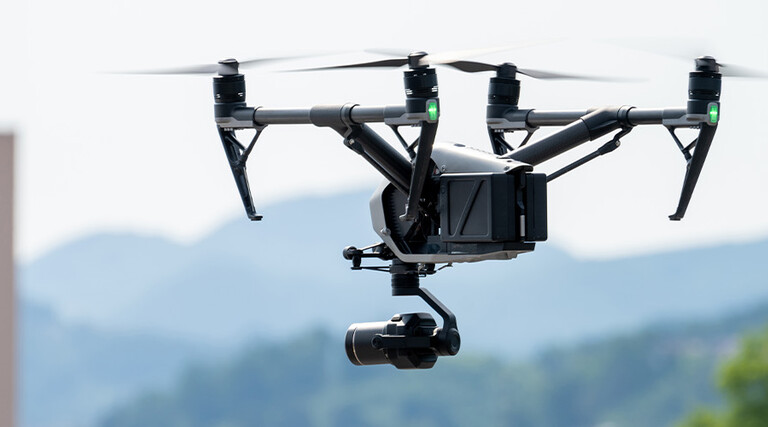
Drones are no longer novelty tools. Drone as a First Responder programs can deploy an aircraft after a call for service, arrive before ground units, provide real-time situational awareness, and reduce unnecessary risk to officers and civilians. That capability will become more important as agencies face staffing constraints and wider service areas.
But North Carolina also needs a counter-drone readiness strategy. Unauthorized or malicious drones can threaten airports, correctional facilities, critical infrastructure, and major public events. State and local agencies often have the clearest view of the threat but the least authority to address it — counter-UAS powers have historically been concentrated at the federal level. North Carolina should be building readiness now: understanding the threat environment, clarifying coordination with federal partners, developing response protocols, and training local agencies before a high-profile incident forces the conversation.
AI and ALPR Show Why Governance Matters as Much as Technology
AI will increasingly shape public safety operations, but the risks and benefits differ dramatically by use case. AI-assisted dispatch triage raises different questions than facial recognition. Report writing automation is different from real-time operational decision support. North Carolina needs a public safety AI framework that is use-case-specific and risk-based — not a blanket policy that either blocks responsible adoption or allows it to happen agency by agency without clear expectations.
Automated license plate readers illustrate the tension directly. North Carolina’s SBI pilot reportedly supported stolen vehicle recoveries, a terrorism watchlist hit, and arrests in homicide and drug cases. But some towns have ended ALPR contracts after privacy and surveillance concerns. The technology works. The governance around it is inconsistent. A statewide framework wouldn’t eliminate local judgment, but it would create clearer baselines for use, data retention, auditing, and public transparency — and it would reduce the fragmentation that leaves agencies and communities both exposed.
The State Needs a Disciplined Pilot Framework
North Carolina doesn’t need to adopt every emerging tool. It needs a better way to test what works. A public safety technology pilot framework would let qualified agencies evaluate promising technologies in controlled, time-limited, transparent environments before committing to larger procurements or statewide rollout.
Pilots should have clear evaluation criteria, defined timelines, privacy safeguards, cybersecurity requirements, and public reporting. Agencies should have to define what problem they’re solving, what success looks like, and how the state will decide whether to expand, modify, or end the pilot. That structure avoids two bad outcomes: reckless adoption of tools that haven’t earned public trust, and paralysis that leaves useful technologies sitting on the shelf while agencies struggle with problems they could solve.
North Carolina Can Lead — If It Moves Deliberately
North Carolina’s communities are more connected, its risks more varied, and its agencies more technology-dependent than ever. The state has strong foundations in VIPER, NG911, and emergency management capabilities built over years of investment. But the next decade will test those foundations in ways the last one didn’t.
Modernizing public safety technology in North Carolina means investing in rural capacity, strengthening NG911, expanding data interoperability, governing AI and ALPR responsibly, building drone and counter-drone readiness, and protecting schools, stadiums, and crowded places with coordinated — not fragmented — strategies.
North Carolina does not need to choose between innovation and accountability. It needs a strategy that makes both possible. Public safety technology is now part of the infrastructure of growth, resilience, and trust — and the state should treat it that way.