

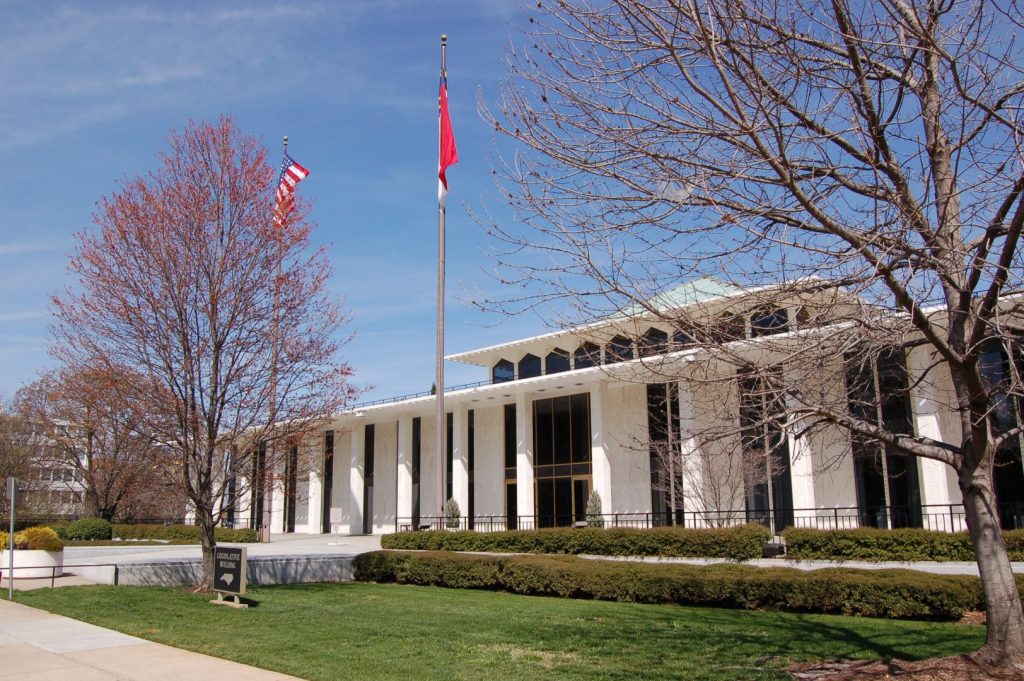
North Carolina’s FY2027 budget does more than fund state agencies for another year. It shows where state leaders want to accelerate projects, where they want to preserve flexibility, and where future decisions will remain under closer control.
For businesses, that is one of the most important parts of the budget to understand.
Top-line appropriations matter, but they rarely tell the full story. For companies, contractors, developers, investors, nonprofits, and local governments, the more important question is how budget authority becomes action. Money can be appropriated, reserved, transferred, staged, awarded, matched with federal funds, or passed through to a local or non-state recipient before it becomes a procurement opportunity.
The FY 2026-27 budget includes more than $34.3 billion in net General Fund appropriations and leaves a $1 billion unappropriated balance. That remaining balance gives policymakers room to respond to unresolved pressures around disaster recovery, Medicaid, infrastructure costs, federal funding, economic development, and other mid-cycle needs.
That structure gives policymakers flexibility while preserving control over when and how certain funds are released. In many cases, the opportunity will emerge only after a reserve is transferred, a grant program is opened, a local recipient is selected, a capital project is scoped, or an agency converts budget authority into a solicitation.
Reserved Money Is Not Always Ready-to-Move Money
One of the most important features of this budget is the difference between money that is appropriated, money that is reserved, and money that still requires another step before it can move.
The bill is explicit on this point. Except where otherwise provided, reserved funds do not automatically constitute an appropriation. That distinction separates a budget signal from actual spending authority.
Several funding pools are especially relevant for businesses, contractors, developers, technology vendors, local governments, and economic development partners:
- $350 million for the State Emergency Response and Disaster Relief Fund, which gives the state dedicated capacity for emergency response and disaster recovery. Other disaster-recovery provisions in the budget show how recovery dollars can become housing repair, road and bridge work, dam safety, flood monitoring, local capital projects, and emergency management support.
- $200 million for the Regional Economic Development Reserve, transferred through OSBM Special Appropriations, creating a major nonrecurring channel for regionally targeted economic development activity.
- $170.9 million for the Economic Development Project Reserve, which is relevant to major project recruitment, incentive-backed infrastructure, manufacturing, aerospace, and industrial site readiness.
- $153 million for the Information Technology Reserve, which supports cybersecurity, systems modernization, permitting technology, data storage, criminal justice systems, elections systems, ERP modernization, and enterprise platforms.
- Federal Infrastructure Match Reserve transfers to DEQ, which position the department to support federally matched environmental and infrastructure-related work, including areas such as water, wastewater, and related project needs where federal funding requires a state match.
- $3.38 billion in the Highway Fund and $2.57 billion in the Highway Trust Fund, which remain among the clearest procurement channels for maintenance, construction, aviation, ferries, public transportation, rail, DMV modernization, ports, and strategic transportation projects.
Not every reserve will immediately result in a contract. A reserve can show where state leaders want flexibility, where costs remain unsettled, or where policymakers want to preserve control before money is released. A large funding pool may not yet represent an actionable opportunity if the money has not been transferred, awarded, or assigned to a defined project. Waiting until a solicitation appears can also be too late, especially when the project scope, buyer, funding source, and political constraints are already being shaped.
Technology Projects Are Already Taking Shape
The Information Technology Reserve is one of the clearest examples of how the budget stages projects before they become public-facing opportunities.
The budget identifies specific projects, total project authorizations, FY 2026-27 allocations, and remaining future allocations. That allows readers to see which initiatives are active now, which are partially funded, and which still depend on future funding decisions.
Several examples stand out:
- NCCCS ERP modernization: $208.9 million total project authorization, with $25 million allocated for FY 2026-27 and $102.9 million remaining.
- DIT cybersecurity: $92.8 million total project authorization, with $42 million allocated for FY 2026-27.
- Adult Correction OPUS project: $50 million total project authorization, with $18 million allocated for FY 2026-27 and $32 million remaining.
- State Board of Elections SEIMS Phase III: $60 million total project authorization, with $15 million allocated for FY 2026-27 and $45 million remaining.
- DIT data storage modernization: $25 million allocated for FY 2026-27.
- DEQ permit transformation: $31.5 million total project authorization, with $3.5 million allocated for FY 2026-27 and $5.96 million remaining.
- SBI technology projects: funding for headquarters data center hardware, network and cybersecurity uplift, and criminal information and identification systems.
These allocations identify specific modernization projects with current funding and, in several cases, additional funding needs in future years.
For vendors, procurement strategy should begin before a solicitation is posted. By the time an RFP is public, the budget ceiling, project sponsor, implementation schedule, oversight structure, and technical assumptions may already be largely defined. Companies that understand the project before procurement begins are better positioned to identify potential partners, evaluate project requirements, and determine whether the opportunity is sufficiently developed and funded.
The Buyer May Not Be the Agency Named in the Budget
Appropriated money does not always become a state agency contract.
Some funding will move through state agencies. Some will move through local governments. Some will be administered through directed grants. Some will flow to nonprofits, volunteer organizations, airports, public authorities, universities, community colleges, or local infrastructure owners. Some will require federal approval, local matching funds, intergovernmental agreements, or additional oversight before the money is available for use.
This distinction matters because the entity receiving the appropriation may not be the entity that ultimately procures the work. A construction firm may look for a state solicitation when the opportunity will actually appear through a county. A technology vendor may follow an agency budget while missing the enterprise architecture or cybersecurity requirements that control implementation. An engineering firm may see a water infrastructure appropriation but fail to track the local utility or grant recipient that will procure the work.
The budget’s directed grant structure reinforces this point. Grants are subject to disbursement rules, compliance requirements, reporting obligations, and reversion deadlines. Larger grants are staged and monitored, which means recipients often must turn state money into planning, design, construction, equipment, software, reporting, administration, or service delivery.
The state may appropriate the funding even when procurement ultimately occurs through a local government, public institution, nonprofit, or other recipient.
Federal Funding Comes With More State Oversight
The budget also shows a more disciplined approach to federal funds. State agencies may apply for and accept grants not otherwise appropriated, but they must consider whether the grant supports a new capital project, creates future state obligations, requires matching funds, or triggers legislative consultation.
These requirements reflect greater state scrutiny of the obligations associated with federal funding. Federal funding remains essential in transportation, broadband, disaster recovery, water infrastructure, public safety, and economic development. At the same time, state leaders are increasingly attentive to the obligations, timelines, policy conditions, and future costs that can come with federal money.
For businesses, a federal award should not be treated as the same thing as a ready-to-procure project. Businesses should determine whether the state has accepted the funds, whether OSBM has approved the necessary budget action, whether a state match is required, whether legislative consultation applies, and which entity will administer the funding.
Where the Strongest Opportunities Are Emerging
The clearest near-term opportunities are associated with programs and projects that already have defined funding, administrative responsibility, and implementation requirements.
Technology is one example. The budget funds cybersecurity, data storage, elections systems, correctional systems, permitting modernization, payroll replacement, health information exchange, and criminal justice technology. Those items reflect a state trying to modernize core systems while managing cyber risk, operational risk, fraud risk, and service-delivery pressure.
Disaster recovery is another example. Recovery funding becomes engineering, housing repair, road and bridge work, flood monitoring, dam safety, wildfire mitigation, temporary relocation, grant administration, and local capital projects. Much of this work will be administered or procured through counties, municipalities, nonprofits, and emergency management partners.
Economic development is also being financed through infrastructure. The budget’s economic development posture is not limited to incentives. It includes site preparation, airport assets, roads, water and sewer, workforce systems, research infrastructure, and capital projects that make recruitment possible.
Energy, water, and permitting pressures are tied to the same question. North Carolina’s growth sectors require power, water, wastewater capacity, transportation access, environmental review, and local political acceptance. The budget reflects that reality by funding infrastructure and technology while preserving oversight over how major commitments are made.
With the budget now enacted, agencies and funding recipients will begin making the administrative, programmatic, and procurement decisions required to implement it. The useful questions are not limited to how much money was appropriated. The better questions are who controls the next step, when the money can move, what conditions apply, which entity will procure the work, and whether the political path is clear enough for the opportunity to materialize.
For businesses, the next step is to identify which entities will administer the funding, when projects are likely to advance, and where procurement will occur.