

Rowan County and the City of Salisbury both presented their FY2027 budgets as exercises in fiscal restraint. Rowan County maintained its property tax rate at 58 cents, while Salisbury required reductions across city departments.
Those decisions are important for taxpayers, but they do not fully describe what the budgets mean for companies that build, equip, advise, or supply local government. Both governments are directing substantial resources toward public safety, infrastructure, facilities, parks, vehicles, and professional services. Several of those investments are already funded through dedicated revenues, utility rates, grants, or available reserves.
Read together, the budgets provide an early view of the contracting activity likely to emerge across Rowan County and Salisbury during the next 12 to 18 months.
Public Safety Is Driving Operating and Capital Spending
Public safety is the most consistent spending priority across both budgets.
Rowan County increased the Sheriff’s Office budget by 19.1 percent and Emergency Services spending by 85.5 percent. The county is adding 11 school resource officers, four paramedics for a new rapid-response unit in southern Rowan County, and a substantial number of emergency and law-enforcement vehicles.
Salisbury is directing the revenue from a 1.9-cent property tax increase toward police compensation. The city is also adding two police officers and establishing a park ranger program.
These investments respond to both service demand and workforce competition. Residential and commercial growth in southern Rowan County is extending the geographic area that emergency medical services and law enforcement must cover. At the same time, both governments are competing with Charlotte, Mecklenburg County, and surrounding jurisdictions for officers, paramedics, and other public-safety personnel.
The resulting compensation pressure is unlikely to disappear after FY2027. Higher pay and expanded staffing generally become part of the recurring budget baseline, which means public-safety spending will continue to influence future capital and technology decisions.
Rowan County Has a Dedicated Public-Safety Capital Stream
One of the most important procurement signals in either budget is Rowan County’s Article 46 sales tax revenue.
The quarter-cent sales tax, approved by voters in 2010, generates approximately $6 million annually and is restricted to public-safety uses. Roughly $1.68 million supports debt service associated with the county’s radio system, while the remaining revenue can be accumulated or used for future public-safety capital needs.
This creates a recurring and relatively predictable funding source for communications systems, emergency equipment, vehicles, dispatch infrastructure, and related technology. For companies working in land-mobile radio, P25 systems, computer-aided dispatch, 911 technology, body-worn and in-car video, station alerting, or public-safety equipment, the Article 46 fund should be monitored independently from the county’s General Fund.
The current budget also includes approximately $2.32 million in committed telecommunications capital. Although that amount does not define the county’s next major communications procurement by itself, it indicates continued investment in the underlying public-safety technology environment.
Several vehicle and facility purchases create related opportunities. Rowan County is funding seven EMS vehicles, including new units and ambulance remounts, along with 26 Sheriff’s Office vehicles. Those purchases typically include radios, mobile-data equipment, cameras, emergency lighting, mounting systems, and other specialized technology.
The planned EMS South Station will also require communications, dispatch connectivity, station alerting, security, and operational equipment. Vendors should therefore view the facility and vehicle programs as broader systems opportunities rather than isolated construction or fleet purchases.
Salisbury Is Addressing Communications and Fire-Service Needs
Salisbury’s public-safety technology investments are smaller but more specifically defined.
The city is funding uninterruptible power supply replacements and vegetation removal at a radio site to improve communications reliability. Those projects create potential needs involving backup power, radio infrastructure, site services, and systems maintenance.
Salisbury is also purchasing another fire engine in addition to four apparatus already on order. The procurement extends beyond the vehicles themselves because modern fire apparatus include pumps, onboard electronics, radios, safety systems, and specialized equipment. The budget also includes rescue equipment and firefighter turnout gear.
The city’s planned Continuity of Operations Plan may produce additional work involving emergency communications, redundant technology, data continuity, facility planning, and organizational preparedness.
Cash and Utility Revenues Support the Construction Pipeline
Rowan County’s near-term construction pipeline is supported substantially through committed fund balance.
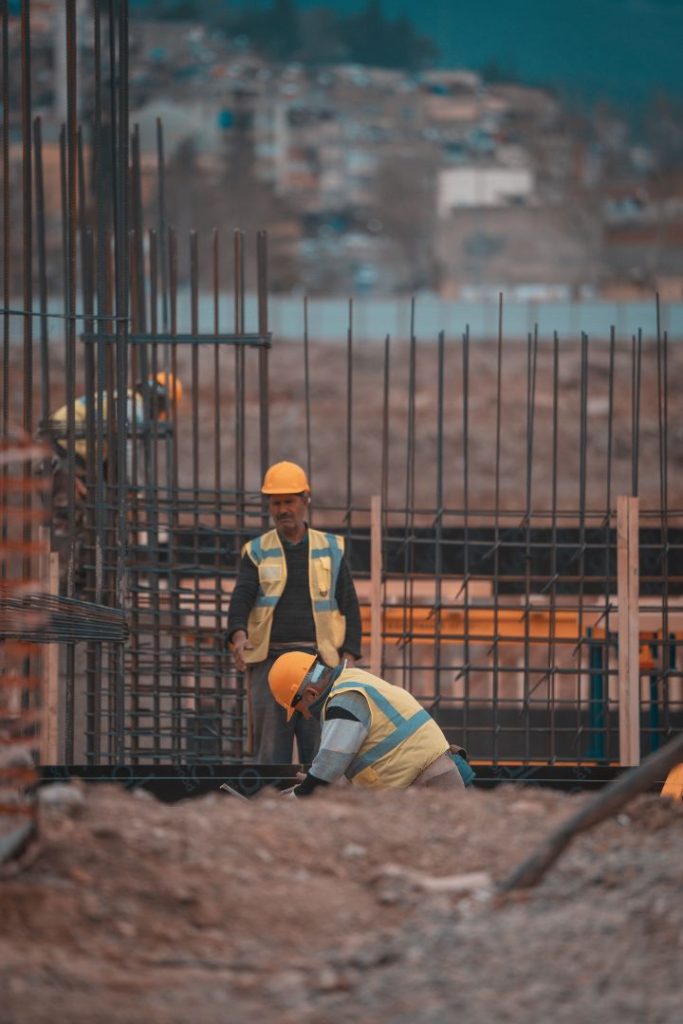
The proposed projects include a $6.53 million EMS South Station, $5 million for a therapeutic park, $5 million for improvements at Dan Nicholas Park, courthouse water-damage repairs, and a park train and station.
Because these projects are supported with existing reserves, they do not require authorization through a future bond referendum. They must still move through design, approval, and procurement, but their funding structure may allow them to advance more directly than projects dependent on future borrowing.
Additional education and institutional work is occurring through Rowan-Cabarrus Community College and local school capital programs. The community college is implementing a $45 million bond program that includes a technology building, fire decontamination station, career-focused facility, and fine arts renovation. Recent school financing also supports a new school serving grades three through eight and roofing projects.
Airport investments involving hangars, concourse improvements, and a rail connection add another source of construction, design, and infrastructure demand.
Salisbury’s most dependable capital pipeline is concentrated in its utility system. The city proposes approximately $16.17 million for water and sewer treatment, distribution, collection, and regulatory compliance. Those investments are supported by an approved rate increase of approximately 4 percent, giving the utility program a dedicated revenue source.
The city is also funding road, greenway, bridge, paving, fueling, roofing, HVAC, and park-restroom projects through a combination of grants, Powell Bill revenues, and local funding.
Salisbury Is Preparing Several Professional-Service Procurements
Salisbury’s budget also identifies a notable group of planning and consulting needs.
The city proposes an economic development strategic plan, a branding study and website redesign, a stormwater rate and staffing analysis, a comprehensive fire department assessment, a citywide employee survey, a parks master plan and cost-recovery study, and housing fund modeling.
Each initiative may lead to a separate solicitation or professional-services engagement. The range of work creates opportunities for firms specializing in economic development, public finance, utility analysis, organizational management, fire and emergency-services consulting, parks planning, communications, website development, housing policy, and community engagement.
The creation of a Capital Project Management Department, effective July 1, is also significant. That department will coordinate more of Salisbury’s capital activity and may become an important point of contact for contractors, engineers, architects, and suppliers seeking to understand the city’s project sequencing and procurement process.
Funding Sources Will Affect Which Projects Move First
The most actionable opportunities are generally those supported by dedicated or already-available funding.
In Rowan County, that includes the Article 46 public-safety revenue, committed-fund-balance projects, and named vehicle and equipment purchases. The county’s new fund-balance policy may also strengthen future capital spending by directing a portion of excess reserves above its target toward committed capital.
In Salisbury, the rate-supported water and sewer program offers a comparatively stable pipeline. Grant-funded transportation and greenway projects are also important, although their schedules remain more dependent on outside funding requirements.
Both governments face longer-term fiscal constraints. Rowan County is using reserves for some recurring expenses, while Salisbury is managing a smaller General Fund and relying on grants for portions of its capital program. Rising public-safety compensation, reduced state or federal support, and higher operating costs could eventually place greater pressure on tax rates, utility rates, and future project schedules.
For contractors and vendors, the FY2027 budgets should therefore be read as more than annual spending documents. They identify funded projects, recurring capital sources, departmental priorities, and emerging procurement responsibilities. Companies that begin tracking those signals now will be better positioned when the formal solicitations follow.