

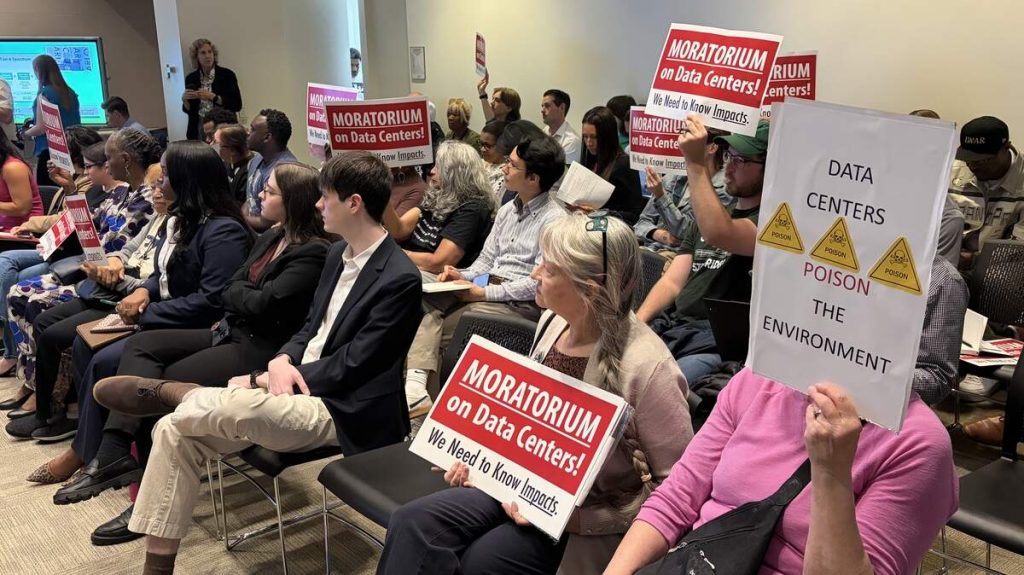
A regional shift is underway across North Carolina and South Carolina. In the span of a few months, dozens of communities have moved to slow, study, or temporarily stop new data center development.
The pattern is no longer limited to one contested project or one rural county. It now spans major cities, fast-growing suburbs, and communities that have not yet received a data center proposal. For developers, investors, utilities, and vendors, the implications extend well beyond zoning.
The moratoriums reflect a changing approval environment in which local governments are asking harder questions about power, water, infrastructure costs, community benefits, and the rules used to evaluate large-scale digital infrastructure.
A Regional Shift in Local Approvals
In North Carolina, the current wave began with Gates County in December 2025 and expanded quickly.
Charlotte became the largest jurisdiction to act when the City Council unanimously approved a 150-day moratorium running through November 5. Rowan County adopted a one-year pause in April, while Cumberland County approved a six-month moratorium in June. Holly Springs, Orange County, Hillsborough, Boiling Spring Lakes, Asheville, and Durham have also taken steps to pause or reconsider new development.
Several of those communities acted before receiving a formal application. That distinction matters. Local governments are no longer waiting for a specific proposal to expose gaps in their ordinances.
South Carolina is following a similar path. Chester County advanced a six-month pause, Spartanburg County directed staff to prepare a one-year moratorium, and York County changed its zoning rules so data centers now require public review through a special-exception process.
State lawmakers are also considering broader action. North Carolina legislators have filed proposals addressing tax incentives and statewide limits on new development, while South Carolina lawmakers have discussed pausing approvals until the General Assembly creates a permanent oversight framework.
Taken together, these actions point to a regional reassessment of how data centers should be reviewed and approved.
The Moratoriums Reflect a Governance Gap
The current response is often described as opposition to artificial intelligence or hostility toward economic development. In many communities, however, the more immediate issue is that existing rules were not written for projects of this scale.
Asheville officials noted that the city’s development ordinance did not define data centers. Hillsborough adopted a temporary pause despite having no active proposal and no organized opposition at the hearing. Holly Springs acted while updating its Unified Development Ordinance.
These communities are using moratoriums to create time for staff, elected officials, utilities, and residents to determine what standards should apply before a project arrives.
For developers, that changes the nature of the challenge. The obstacle is not always a closed door. It may be a planning and regulatory vacuum.
Companies that understand the difference can use the pause to study local concerns, provide credible technical information, and prepare for the rules that are likely to follow. Companies that treat every moratorium as an adversarial act risk worsening the very trust problem that local officials are trying to manage.
Where Projects Have Broken Down
Recent project failures across the Carolinas share several characteristics: limited public information, compressed timelines, and decisions made before communities understood what was being proposed.
In Marion County, South Carolina, officials approved a $2.4 billion Stream Data Centers project during a winter storm after council members signed nondisclosure agreements. Residents learned key details only after the vote, and the resulting backlash became part of a broader loss of support. The company formally canceled the project in June.
In Stokes County, North Carolina, commissioners rezoned roughly 1,845 acres along the Dan River for the proposed Project Delta complex despite opposition from the planning board. The site included culturally significant land, tribal sites, and family cemeteries. A lawsuit followed, and the county later voided the rezoning after acknowledging that it had failed to meet statutory notice requirements by alerting residents sooner than the law allowed.
Spartanburg County faced similar concerns after residents questioned when local officials first learned about a proposed project and why the county considered a moratorium only after controversy had already developed.
The common problem was not simply project size. It was the breakdown of process and trust around how decisions were made.
Once a community believes that a project has moved forward without adequate notice, explanation, or opportunity for review, the technical merits become much harder to evaluate on their own.
Power Is Becoming the More Important Constraint
Local opposition attracts the most attention, but power availability may prove even more important to future development.
Stream did not leave Marion County solely because of public anger. The company also could not secure utility power within the required timeline.
That issue is becoming more common. Duke Energy projects that data centers will account for roughly 80 percent of new electricity demand growth in North Carolina. Utilities face growing interconnection queues, major transmission needs, and pressure over who should pay for system upgrades.
A favorable zoning decision or incentive agreement no longer guarantees that a project can proceed. Developers must determine whether power is available, when the utility can deliver it, what upgrades will be required, and how regulators will allocate those costs.
For investors, confirmed and deliverable power is becoming a more meaningful project milestone than an early political commitment or incentive package.
Which Projects Are Affected by Moratoriums
Moratoriums do not affect every project equally.
North Carolina law limits the ability of local governments to apply new restrictions to projects that have established vested rights or begun qualifying site work. Rowan County’s moratorium excludes the Long Ferry Road site because preparation was already underway. Charlotte’s pause does not affect two previously approved projects totaling nearly one million square feet.
That creates a meaningful divide between projects that secured rights before a moratorium and those that entered the process too late.
At the same time, communities are increasingly adopting rules before a developer selects a site. By the time a company begins formal due diligence, the ordinance governing the project may already be in place.
Developers therefore need to assess not only current zoning, but also the direction of local policy, the status of pending ordinance changes, utility constraints, and the likelihood of a preemptive pause.
Implications for Developers, Investors, and Vendors
The current moratorium wave does not mean data center development in the Carolinas is ending. It means the approval environment is becoming more demanding and more sophisticated.
Developers will need to engage earlier, explain projects more clearly, and address legitimate concerns about power, water, infrastructure costs, noise, land use, and long-term community value.
Investors will need to evaluate political and regulatory exposure alongside conventional site, financing, and construction risks. A project may appear viable on paper while remaining vulnerable to a moratorium, an ordinance change, a utility delay, or a breakdown in local trust.
Vendors should also expect project timelines and purchasing decisions to depend increasingly on the same external factors. Delays in zoning, power delivery, or community approval can affect equipment demand, contracting schedules, and market-entry plans long before a procurement decision becomes visible.
The companies most likely to advance projects successfully will be those that understand the full decision environment before committing capital. That requires more than securing land or meeting the technical requirements of an ordinance. It requires a clear view of local politics, utility capacity, public expectations, legal procedure, and the sequence in which each issue must be addressed.
Across the Carolinas, communities are not simply deciding whether to accept data centers. They are deciding the terms under which future development will be allowed to proceed. For companies with capital tied to the sector, understanding how those terms are taking shape is now part of basic project diligence.
Related Vertex Capabilities: