

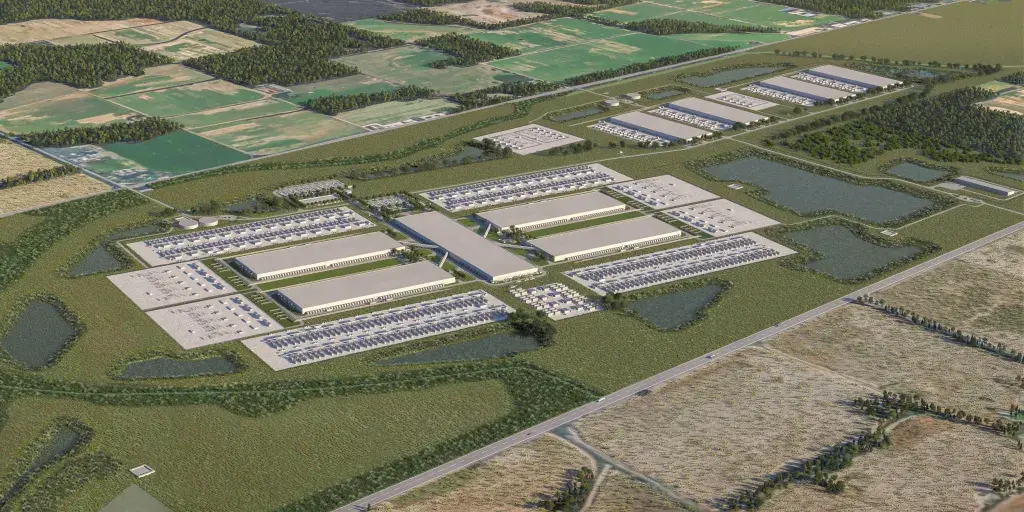
This spring, teachers in a rural Louisiana parish received end-of-year bonuses worth more than fifty thousand dollars. For many, the payment matched or exceeded a full year’s salary.
The money came from a surge in local sales tax revenue tied to Meta’s nearby data center. The parish received approximately twenty-two million dollars from the site’s first tax payment, more than it typically collects in sales taxes over an entire year. Roughly half went to the school board.
The example shows the scale of economic value a data center can create. It also stands apart from the current public debate, which has focused heavily on power demand, water use, infrastructure costs, and the relatively small number of permanent jobs many facilities support.
Those concerns are legitimate. More than two dozen communities across North Carolina and South Carolina have paused or restricted new data center development in recent months. In most cases, those actions reflect less a rejection of the industry than a reassessment of what communities should require from large projects.
The central question is not whether data centers create value. Many clearly do. It is whether companies and communities structure projects in ways that capture that value without shifting an unreasonable share of the cost or risk onto the public.
Economic Impact and the Limits of the Standard Model
According to the Data Center Coalition, the industry’s trade group, data centers contributed approximately $18.5 billion to North Carolina’s economy in 2024, supported more than 117,000 jobs, and generated about $1.4 billion in state and local tax revenue.
Those figures come from an industry organization, but the underlying pattern is visible across the state. Data center investment has often reached rural and industrial communities that have spent decades trying to replace lost employers and rebuild their tax base.
Google opened its Lenoir campus in Caldwell County in 2007 with an investment of approximately $1.2 billion. It is now the county’s largest taxpayer, and the company recently committed another $1 billion over two years. Apple’s investment in Maiden grew from an initial $1 billion pledge to more than $3 billion, while Meta established its campus in Forest City.
These projects landed in communities that had suffered from the decline of textile and furniture manufacturing. They also put existing land, power, water, and industrial infrastructure back to work.
That record does not mean every project produces the same result.
The standard data center model brings a substantial period of construction activity followed by a much smaller number of permanent jobs. A project may also generate significant tax revenue without creating benefits that residents can clearly see.
Research from the Brookings Institution has highlighted this gap between the scale of the investment and the more modest level of lasting employment. That does not eliminate the value of a project, but it means communities should evaluate more than the size of the facility or the amount invested.
The terms of the deal matter just as much.
What Stronger Projects Require
Fair Cost Allocation
Large data centers can require new substations, transmission upgrades, water and wastewater improvements, road work, and other infrastructure. When the project does not cover those costs, households and existing businesses may face higher rates or reduced system capacity.
Microsoft has said its proposed Person County project will cover its own costs so the development does not raise electricity prices for other customers. Amazon has stated that its planned $10 billion Richmond County campus will use the county’s existing surplus water capacity without imposing additional costs on local ratepayers.
North Carolina Senate Bill 730, which has passed the House, would require large data centers to cover the infrastructure and energy costs associated with their projects rather than shifting those expenses to other customers.
Regardless of the bill’s final outcome, that principle is likely to remain central to future project reviews. Communities and regulators increasingly expect large-load customers to show that existing ratepayers will not subsidize new development.
Water Use and Local Capacity
Water use has become another major concern, particularly in fast-growing areas and communities with limited supply or treatment capacity.
The actual demand varies by cooling system, climate, facility design, and operating model. Newer technology can reduce consumption significantly, but companies must incorporate it at the beginning of the project.
Amazon says its Richmond County campus will use outside air for cooling approximately 93 percent of the year and rely on water less than 7 percent of the time. Microsoft plans to use a closed-loop system at its Person County site so the facility can recirculate water rather than continually drawing new supplies.
Both companies have also adopted goals to replace more water than they consume by 2030. Those commitments can reduce project risk, but the details matter. Water replacement offers limited local value when it occurs outside the watershed that supports the facility.
Communities should evaluate where replacement will occur, when the benefits will materialize, and whether the assumptions reflect local conditions.
Community and Workforce Investment
A project’s public value becomes easier to demonstrate when the agreement includes clear and measurable local commitments.
In Caldwell County, Google paired its latest expansion with a $2 million fund for weatherization and energy-efficiency improvements in low-income homes and schools. The company also supported student retention efforts and the restoration of a historic high school.
In South Carolina, York County structured its agreement with QTS so that one school district will receive approximately $5 million annually for every billion dollars the company invests.
These commitments work best when companies and local officials negotiate them early, tie them to priorities the community has already identified, and make them specific enough to measure.
Workforce investment should be part of the same discussion. Data centers will not employ as many permanent workers as large manufacturing plants with comparable capital investment, and companies should be candid about that distinction.
They can still support local training, research, cybersecurity education, electrical trades, and equipment maintenance. Microsoft, for example, helped establish a data center training academy in Wisconsin designed to prepare more than one thousand students for technical roles.
Those programs do not change the facility’s direct employment profile, but they can leave behind skills and institutions that remain valuable after construction ends.
Changing Site and Negotiating Conditions
The balance of leverage between communities and developers has changed.
For years, communities competed aggressively to secure data center investment, often using incentives and favorable terms to distinguish themselves from other locations. Developers could choose among a wide range of jurisdictions willing to accommodate a project.
The number of viable sites has narrowed. Large projects now require substantial land, access to water, community support, and power that a utility can deliver within a commercially workable period.
Developers increasingly compete for the limited number of sites that meet all of those conditions. Communities with available capacity therefore have more leverage to negotiate cost protections, water commitments, workforce investments, and direct public benefits.
Companies that recognize this shift can reduce approval risk by addressing those expectations before the formal process begins. A project that establishes credibility early is less likely to encounter a prolonged moratorium, contested rezoning, or organized opposition that delays development and raises costs.
Early Engagement Shapes Long-Term Outcomes
Companies, utilities, and public officials shape much of a data center’s long-term value before the project reaches a public hearing. Decisions about site selection, cooling systems, infrastructure costs, water use, workforce commitments, and local investment determine whether residents ultimately view the project as an opportunity or a burden.
For companies and investors, that early stage deserves more attention than it often receives. Power availability and public trust have become two of the most important constraints on data center development, and both can deteriorate before a project enters the formal approval process.
For North Carolina and South Carolina, the opportunity remains significant, particularly in rural communities with available infrastructure and a need for new investment. At the same time, a poorly structured project can create resistance that affects not only one development but an entire category of future investment.
Data centers now support medical records, financial transactions, government systems, artificial intelligence, cloud computing, and many of the services that families and businesses use every day. Their importance does not eliminate the need for fair cost allocation, responsible resource use, or credible local commitments.
Projects that address those issues early can strengthen public services, support industrial communities, and create durable economic value. Projects that overlook them are more likely to face delays, opposition, and long-term political risk.
The difference is determined less by the size of the investment than by the decisions made before the project becomes public.