

For years, the limiting factors on data center development were capital, fiber, land, and permits. Capital is available. Fiber is abundant. Land can be found. Power is the constraint that is now selecting where AI infrastructure can actually be built.
The scale of what is being asked of the American electric grid is not fully reflected in most investment analyses. AI workloads drove more than one-third of US GDP growth in the first nine months of 2025. The data centers enabling that growth now consume roughly 6% of all electricity in the United States — a figure that was under 2% a decade ago. The United States accounts for approximately 43% of global data center electricity consumption. Lawrence Berkeley National Laboratory projects US data center electricity demand will grow from 176 terawatt-hours in 2023 to between 325 and 580 terawatt-hours by 2028 — an increase roughly equivalent to adding the entire electricity consumption of several large states within five years.
Grid Strategies estimates the US will need more than 150 gigawatts of additional capacity within five years to meet the combined demand of AI infrastructure, industrial reshoring, and electrification. For context: the entire existing US data center sector draws roughly 29 gigawatts today.
The grid was not built for this. The processes for connecting new generation and new loads were not designed for this pace. And the supply chains for the equipment that makes grid expansion physically possible are constrained in ways that no amount of regulatory reform can fix quickly. Power availability is no longer a site-selection consideration. It is a site-selection filter — and it is eliminating more candidate locations than any other factor in the market.
The Interconnection Queue Is a Five-Year Problem
As of the end of 2025, more than 2,060 gigawatts of generation and storage capacity were actively waiting in US interconnection queues, according to Lawrence Berkeley National Laboratory. The median time from interconnection request to commercial operation is approaching five years. Power constraints are extending data center construction timelines by 24 to 72 months, according to analysis from the World Resources Institute. Those are not edge cases or outliers. They are the central tendency of the current market.
The interconnection queue problem is structural, not administrative. The underlying issue is that grid operators are being asked to evaluate an unprecedented volume of requests against transmission infrastructure that was planned for a fundamentally different demand environment. FERC’s Order 2023, which reformed interconnection processes to require more project readiness and move toward cluster-based studies, was a meaningful step. It has not resolved the backlog. The queue has grown in absolute terms even as processing efficiency has improved, because new requests are arriving faster than old ones are being cleared.
The load side of the problem has received less regulatory attention than the generation side. The DOE issued a Large Load Interconnection Directive in October 2025 directing FERC to initiate rulemaking to rapidly accelerate interconnection of large loads — specifically those above 20 megawatts — with a deadline of April 30, 2026. That rulemaking is active. Its outcome will directly affect timelines for every data center project seeking grid connection in a non-ERCOT market. The difference between markets is significant: in ERCOT, average interconnection takes approximately one year. In the rest of the country, the median is approaching five.
Transformers Are the Silent Bottleneck
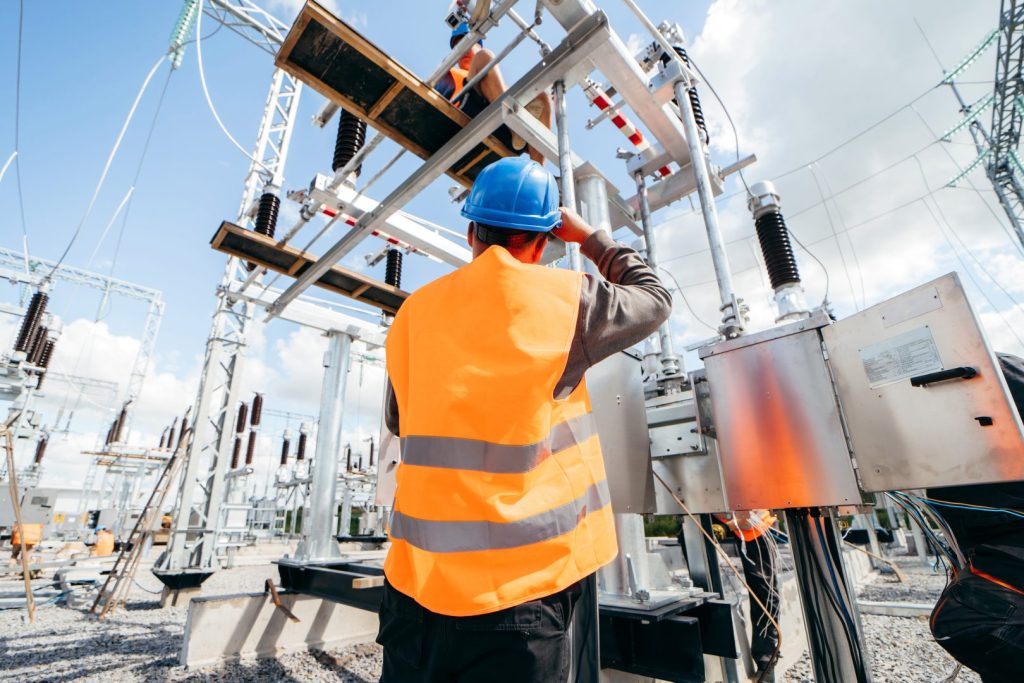
The interconnection queue is visible and well-documented. The transformer supply chain is less discussed and equally constraining. Large power transformers — the equipment that steps voltage up and down at substations and makes it possible to move electricity from generation to load — now carry lead times of two to four years. That is not a temporary supply disruption. It is a structural manufacturing capacity problem that accumulated over decades of flat demand and is now being exposed by a demand surge that arrived faster than manufacturing capacity can expand.
For a data center developer, a four-year transformer lead time means that even a project with a clear permitting path, an executed interconnection agreement, and committed capital cannot simply begin construction and expect power to be available at completion. The physical components required to energize a new large-load facility have to be ordered years in advance of the project’s anticipated operational date. Developers who are not managing transformer procurement as a parallel workstream to permitting, financing, and construction are building schedules on assumptions that the supply chain cannot support.
Transformers are not the only constraint in the physical supply chain. Switchgear, high-voltage cable, and specialized substation equipment face similar lead time pressures. The combination of these supply chain dynamics with interconnection queue timelines means that the gap between a developer’s projected in-service date and a realistic in-service date is often measured in years — not months.
Three Strategies Are Emerging — With Very Different Risk Profiles
Serious developers and capital allocators are not simply waiting for grid infrastructure to catch up. Three distinct strategies have emerged, each with different risk profiles, cost structures, and regulatory exposures.
The first is geographic arbitrage — locating in markets with available interconnection capacity, shorter queue timelines, and utility planning that has already incorporated large load growth. Texas’s ERCOT market has the most favorable interconnection timeline of any major US market, though ERCOT is now managing its own version of the load growth problem that is beginning to generate the same kind of grid impact and ratepayer concerns visible elsewhere. Markets with available substation capacity, shorter queue positions, and utilities already in active large-load planning conversations represent the most direct path to faster operational timelines.
The second is behind-the-meter generation — building dedicated power generation capacity alongside the data center facility, connecting to the grid at a single point for backup service, and operating largely outside the interconnection queue process for the primary power supply. This strategy avoids the five-year queue but introduces significant capital requirements, fuel supply risk, regulatory complexity at the state level, and in some markets, FERC jurisdictional questions that Senator Cotton’s DATA Act is attempting to address legislatively by creating a new category of off-grid utility exempt from Federal Power Act provisions.
The third is power purchase agreement and capacity reservation strategies — securing long-dated power contracts, reserving substation capacity before a specific project is defined, and effectively buying a position in the power market ahead of specific development commitments. This approach is increasingly common among hyperscalers, which have the balance sheet to hold power commitments speculatively and the development pipeline to deploy against them. For smaller developers and investors, the capital requirements make this strategy difficult to replicate.
What This Means for Capital Allocation
PJM’s capacity auction — covering the 13-state region from Illinois to New Jersey — ballooned from $2.2 billion to $14.7 billion in a single year, driven largely by interconnection delays that constrained the supply of available capacity. Consumers across the PJM footprint will pay the difference. Virginia alone absorbed $1.98 billion in transmission costs passed to ratepayers in 2024 from data center interconnections — a figure that has become a political flashpoint reshaping the regulatory environment around data center development in that state.
For investors evaluating data center assets, the power constraint changes the underwriting in ways that are not always reflected in current asset pricing. A project’s projected in-service date should be stress-tested against realistic interconnection timelines and transformer procurement schedules, not engineering plans that assume availability on demand. A facility’s power cost assumptions should account for the rate trajectory in markets where large-load cost allocation is under active regulatory review — a growing list that now includes most of the major data center markets in the country. And a project’s location premium should reflect not just current power availability but the likelihood that the local grid can support the load growth the project is designed to accommodate over a ten-year hold.
North Carolina in the National Picture
North Carolina is not immune to the national constraint — and in some respects faces a more concentrated version of it. Duke Energy’s load forecasts project total net electricity demand across its two North Carolina systems increasing between 16% and 60% over the next 15 years. The 6.3 gigawatts of planned data center load already in the state’s pipeline is creating interconnection and substation capacity pressure that is showing up directly in Duke’s rate case, in the Energy Policy Task Force’s deliberations, and in the political environment that has produced more than a dozen local moratoriums.
What distinguishes North Carolina from some of the harder-hit markets is that the state’s power constraint is still early enough in its development to be shaped by deliberate policy. The large-load tariff framework the task force has recommended, the generation additions in Duke’s integrated resource plan, and the transmission investments being evaluated in the Carbon Plan proceeding are all decisions that will determine whether North Carolina’s grid can absorb the next wave of AI infrastructure investment or whether developers route around the state toward markets with clearer and faster power pathways.
The developers and investors who get the next decade of AI infrastructure right will be the ones who treated power availability as the primary site-selection variable — not a secondary consideration that gets addressed after land, incentives, and permits are resolved. The constraint is physical, the timeline is long, and the markets that solve it earliest will attract disproportionate investment. The markets that don’t will watch projects route elsewhere.